Installing a Septic System in Griffin, GA: What New Homeowners Must Know
New homeowners in Griffin, GA can protect their property from the start by understanding how septic system installation works before problems arise.
What Does Septic System Installation Actually Involve?
Septic installation is a multi-step process that goes well beyond simply burying a tank in your yard. It requires soil testing, system design, permits, excavation, component placement, and a final inspection — all coordinated with your county health department.
The first step is a soil test, sometimes called a percolation or perc test. This measures how quickly your soil absorbs water, which determines what type of system your property can support and how large the drain field needs to be. In Spalding County, where Griffin sits, clay-heavy soil is common and can slow absorption significantly. Getting this test done early prevents costly redesigns later.
After soil testing, a licensed contractor designs a system sized for your home's specific needs — number of bedrooms, daily water usage, and lot layout all play a role. The design must meet Georgia's on-site sewage management regulations before any installation work begins. Skipping or rushing this step is one of the most common and expensive mistakes new homeowners make.
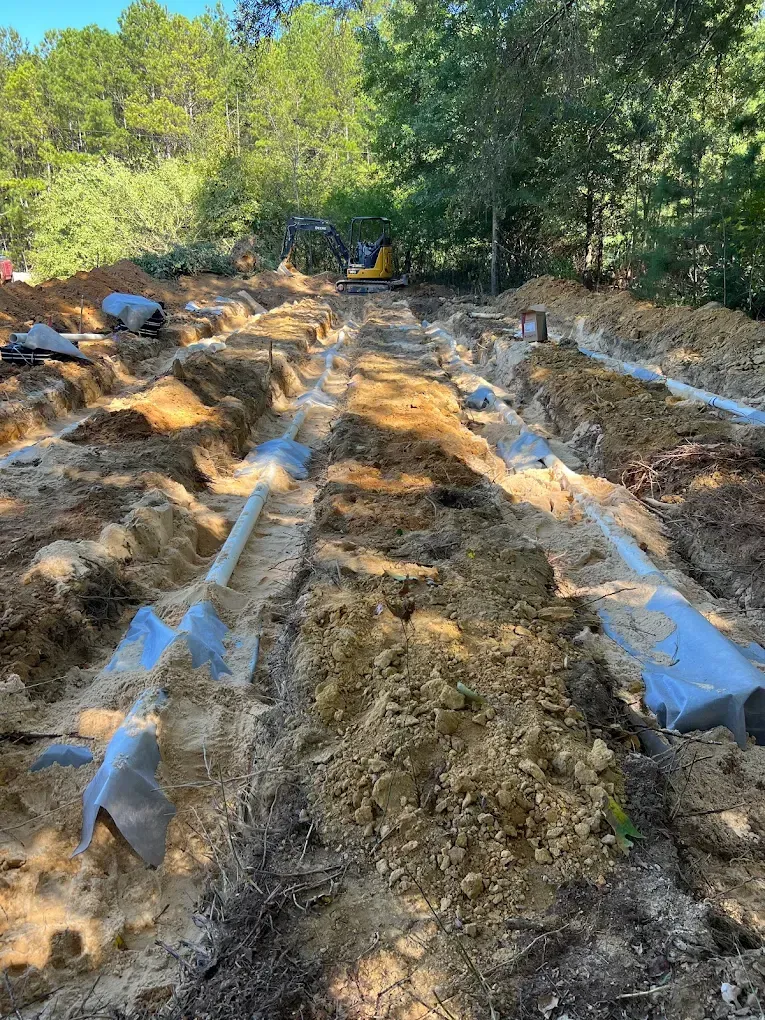
Once permits are approved, excavation begins. The tank is placed, inlet and outlet pipes are connected, and the drain field is laid out according to the approved design. A final inspection confirms everything meets code before the system is covered. Most residential installations take three to five days depending on site conditions.
How Do Griffin's Soil Conditions Affect Your New System?
Griffin's clay-rich soil is one of the most important factors shaping how your septic system gets designed and installed. Understanding this before you build or buy helps you avoid surprises down the road.
Clay soil absorbs water slowly, which means drain fields in this region often need to be larger than those in sandier areas. If a system is undersized for the actual absorption rate of your soil, wastewater can back up into the drain field before it's fully treated, saturating the yard and potentially reaching the surface. This is both a health concern and a costly repair scenario.
The good news is that experienced local contractors know how to design around these conditions. Proper grading, correct pipe placement, and choosing the right tank size for your household can all compensate for slower-absorbing soil. What matters most is working with someone who has tested and installed in your specific area — not just someone who follows a generic template.
If your property has a high water table in addition to clay soil, alternative system types may be required. A licensed professional will identify this during the design phase and recommend options that keep your home compliant and your yard dry. Learn more about the communities we serve and the soil conditions we regularly work with on our areas we serve page.
Which Permits and Steps Are Required Before Installation Starts?
You cannot legally install a septic system in Georgia without going through an approval process with your county health department. In Spalding County, this means submitting a site plan, soil evaluation results, and a system design before any digging takes place.
The permit process typically requires a licensed contractor to submit the soil test results and proposed system design for review. The health department evaluates whether the design meets minimum setback distances from wells, property lines, and structures, as well as whether the system type and size are appropriate for your soil and household. Approval can take anywhere from a few days to several weeks depending on the county's workload and whether revisions are needed.
Once permits are issued, installation can begin. After the work is complete, a licensed inspector from the health department visits the site to confirm everything was installed according to the approved plan. Only after passing that inspection can the system be covered and placed into service.
New homeowners sometimes try to speed up this process by having work done without permits, especially on older rural properties where previous systems may never have been permitted. This creates serious legal and financial risks when selling the home or applying for refinancing. Starting the right way protects your investment from day one.
What Older Griffin Neighborhoods Reveal About Housing Stock and Septic Systems
Griffin has a mix of established neighborhoods, rural properties, and newer residential developments — and that variety matters when it comes to septic systems. Older homes that predate public sewer expansion may have systems installed decades ago under different standards, while newer construction follows current Georgia code requirements.
If you purchased an older home in Griffin with an existing septic system, it's worth having that system inspected before assuming it meets current standards. Tank materials, drain field configurations, and system sizing have all evolved over the years, and what passed inspection in 1980 may not perform well by today's standards — or meet current county requirements.
Newer subdivisions on the outskirts of Griffin are often built on properties that were previously farmland or timber land, where soil conditions can vary widely across a single lot. This makes the soil testing step especially important for new construction in these areas. Don't assume a neighbor's system design will work identically on your parcel even if the lots look similar.
Whether you're in a mature in-town neighborhood or a newer development, a qualified local contractor can walk you through what your home's situation calls for specifically. Read what other Griffin-area homeowners have experienced by visiting our customer testimonials page, then call JD Septic & Sewer at (470) 541-0848 to discuss your property's needs.
Septic installation is one of those investments that pays for itself many times over when it's done right from the beginning. A properly designed and permitted system will serve your household reliably for decades with only routine maintenance.
Schedule a consultation with JD Septic & Sewer at (470) 541-0848 to get expert guidance on septic installation services in Griffin that match your property's specific conditions.