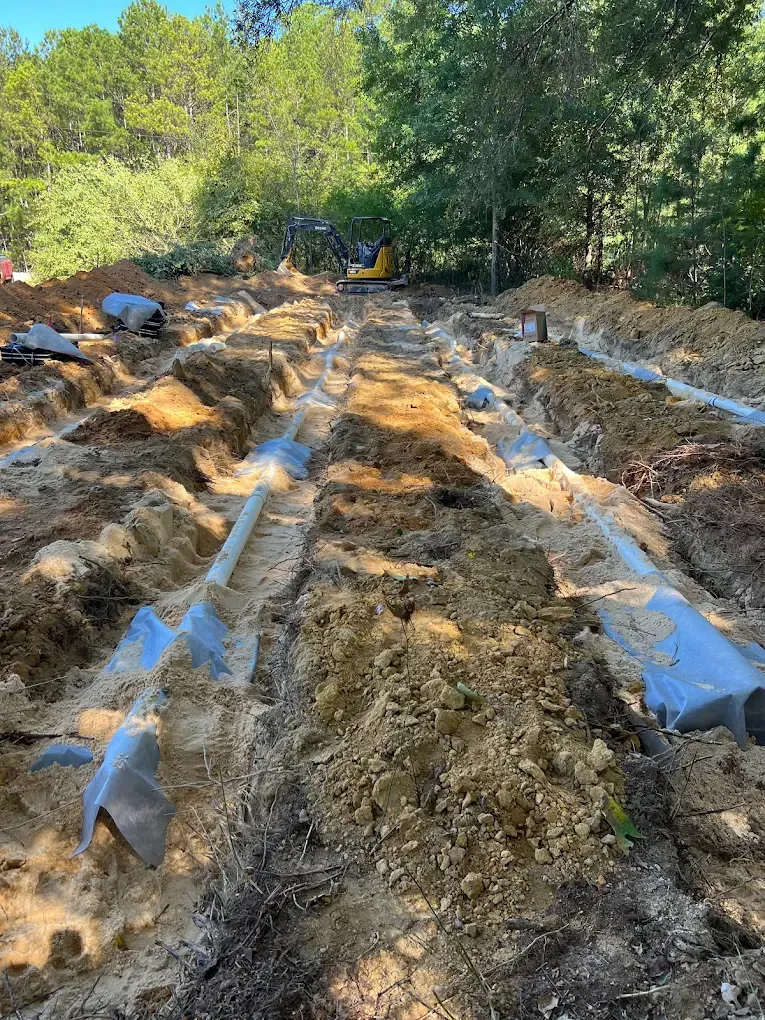
A Properly Installed Septic System in Stockbridge Starts With What's Underground
Why Soil Data Determines Whether a New System Lasts Decades or Fails in Years
A new septic system that's sized correctly and positioned to match your property's soil absorption capacity will operate with minimal intervention for 25 to 40 years. One installed without adequate soil testing may show drain field stress within five to seven years — not because of usage, but because the design never matched what the ground could actually handle. That outcome is entirely avoidable when installation begins with the right evaluation.
JD Septic & Sewer handles complete septic system installation across Stockbridge and the surrounding Henry County area, from initial soil testing through final county inspection. The installation process accounts for percolation rates measured at multiple depths, seasonal water table elevation, and the actual hydraulic load the household will generate. The result after installation is visible and functional: a drain field that absorbs effluent evenly, a tank positioned for easy future access, and a system that passes county inspection without revisions.
The Installation Process That Produces a System Built for Stockbridge Conditions
Soil across the Stockbridge area shifts from clay-dominant profiles near older subdivisions to more variable compositions in newer development corridors along Highway 138 and beyond. Each soil type requires a different drain field configuration — clay soils need wider lateral fields to compensate for slow absorption, while faster-draining soils require careful sizing to prevent untreated effluent from bypassing the treatment zone. Perc testing conducted at the actual installation depth, not just the surface, determines which design approach applies to your property.
Once soil data is collected, the system design specifies tank size, drain field dimensions, distribution box placement, and required setbacks from wells, property lines, and structures. Excavation follows the approved design exactly, with tank placement and line grading verified before backfill. Georgia requires drain field sizing to be calculated against both household size and measured percolation rate, and every installation the team completes meets or exceeds those minimums — which is why final inspections pass without conditional notes.
If you're planning new construction or replacing a failing system, reach out now for septic tank installation in Stockbridge before your project timeline gets compressed.
What the Installation Process Includes, Step by Step
Understanding what a complete installation covers helps you evaluate proposals and avoid contractors who skip steps that matter for long-term performance in Stockbridge's variable soil conditions:
- Soil testing and perc tests conducted at installation depth to determine accurate absorption rates before any design is drawn
- System design that specifies tank size, drain field layout, and distribution method based on measured soil data and household load
- Permit coordination with Henry County health department to ensure design approval before excavation begins
- Excavation, tank placement, and line installation graded to promote uniform effluent distribution across the full drain field
- Final inspection coordination and startup walk-through so you understand access points, maintenance intervals, and what to watch for
A septic installation in Stockbridge typically takes three to five days once permits are approved — but permit approval depends on having accurate soil data submitted with the design. Starting the testing phase early in your project keeps the construction schedule intact. Contact us today for septic tank installation in Stockbridge and get the process moving with the right foundation.