Atlanta's Compacted Urban Soil Creates Septic Failures That Generic Service Misses
Why Metro Atlanta's Geology Demands More Than a Standard Service Call
Decades of construction, grading, and impervious surface expansion across metro Atlanta have altered drainage patterns in ways that affect every septic system still operating within the city's reach. Compacted fill soil, disrupted natural drainage channels, and proximity to neighboring impervious surfaces change how effluent moves through the ground — and standard service protocols designed for rural Georgia conditions don't account for those variables. When a drain field in an Atlanta-area property fails, the cause is often not age alone but the interaction between system age and changed site hydrology.
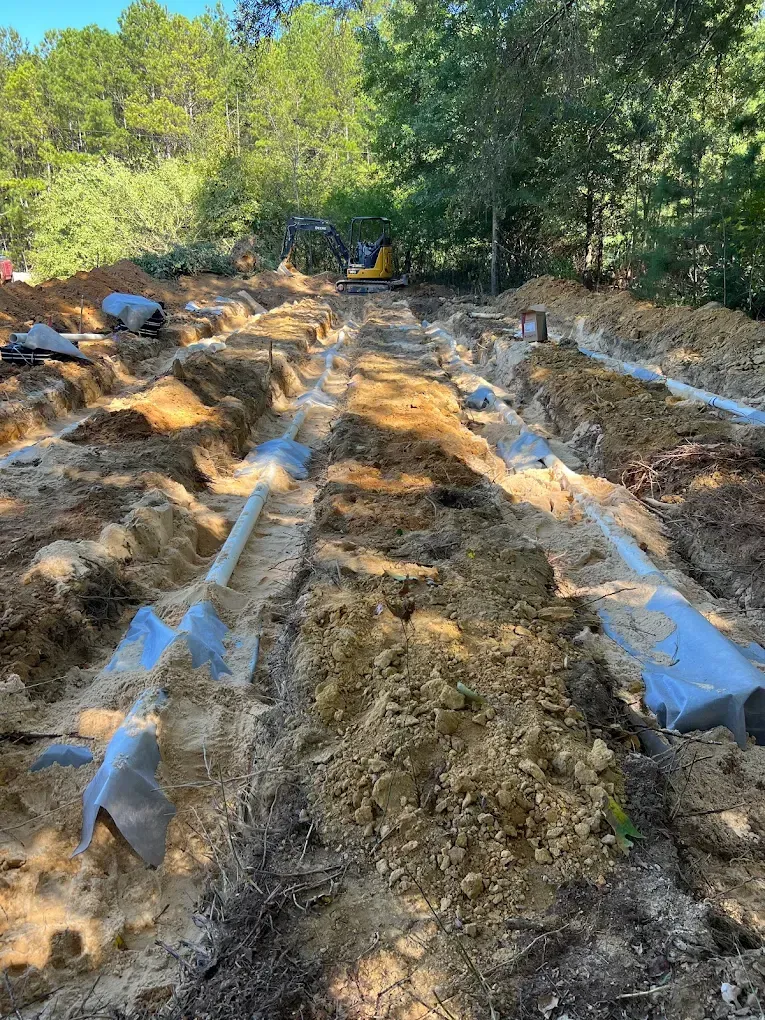
JD Septic & Sewer provides repair, installation, pumping, maintenance, and inspection services for Atlanta-area properties, where soil conditions range from dense clay in established intown neighborhoods to sandy loam in areas along the outer development corridors. Each service call includes an assessment of the site conditions affecting system performance — not just the component that triggered the call. After service, the difference is measurable: drains clear, yard saturation recedes, and the system operates within its design parameters rather than fighting conditions it wasn't originally engineered for.
How Atlanta's Urban Environment Shapes Every Septic Service Decision
Urban development pressure in Atlanta creates two distinct problems for septic systems. First, altered grading and impervious surfaces redirect stormwater toward drain fields, adding hydraulic load from rainfall that a rural system in open soil would never experience. Second, space constraints on urban lots limit options for drain field repair or expansion — when a field fails, there may be only one viable replacement location, and identifying it requires understanding both soil conditions and setback requirements relative to structures, utilities, and property lines.
The team evaluates Atlanta properties with both factors in mind, using site-specific diagnosis that distinguishes component failure from hydraulic overload from soil exhaustion — because the repair approach is different for each. Atlanta's complex geology, including bedrock proximity in some neighborhoods and variable clay depth across the metro area, means that installation and repair decisions require knowledge of what's beneath the surface, not just what's visible at grade. Every service call is documented, and every recommendation is based on what the specific property requires.
Get in touch today for septic services in Atlanta — whether the problem is active or you're planning ahead, the right diagnosis changes the outcome.
What Can Go Wrong When Atlanta Septic Problems Go Unaddressed
Atlanta-area septic systems face failure patterns that develop faster than rural counterparts because urban conditions remove the natural buffers that slow degradation. These are the problems that escalate when service is delayed:
- Drain field hydraulic overload from redirected stormwater on graded Atlanta lots, causing surfacing effluent that creates health and code violations
- Accelerated baffle deterioration in older intown systems where groundwater infiltration during rain events raises the water level inside the tank
- Root intrusion from large trees on established Atlanta properties entering pipe joints and distribution boxes, restricting flow systemically
- Compacted soil conditions near the drain field perimeter preventing lateral absorption and concentrating effluent load on the field's interior zones
- Pump system failures on lots where gravity flow isn't feasible, leaving effluent stranded in the tank with no path to the field
In Atlanta's regulatory environment, a failing septic system can trigger county health department action and create compliance liability that complicates property transactions. Addressing problems at the repair stage rather than the replacement stage protects both the property and its title. Learn more about septic services in Atlanta by contacting us today — early action is always less expensive than emergency response.