Why Proper Excavation Depth Matters More Than Tank Brand
What Separates Functional Installations From Premature Failures
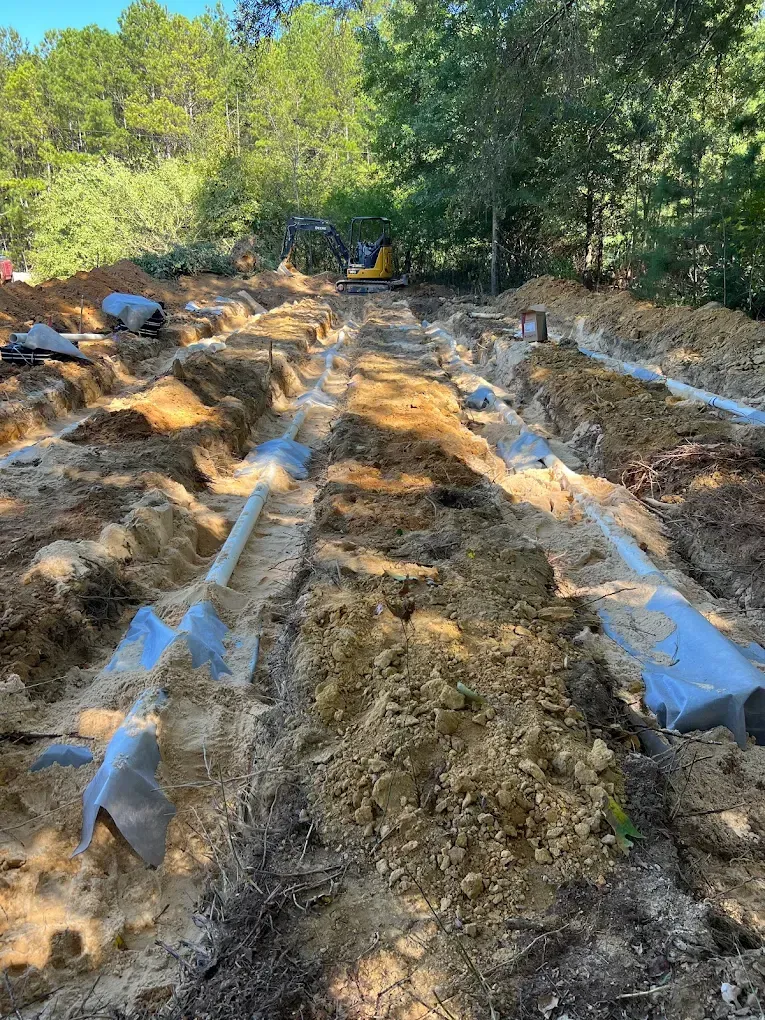
When dealing with septic system installation in Forsyth, most system failures within the first decade trace back to installation shortcuts rather than equipment defects. A tank placed without proper bedding settles unevenly and cracks at the inlet pipe connection. Drain field trenches excavated too shallow freeze during cold snaps, while trenches too deep put the distribution pipes below the biologically active soil layer where treatment actually occurs. The difference between an installation that functions for thirty years and one that fails in five often comes down to whether the installer followed engineering specifications or took shortcuts to finish faster.
JD Septic & Sewer provides full septic system installation services including excavation, tank placement, drain field configuration, and line installation for residential and commercial properties. The installation process establishes relationships between components that either work with Forsyth's soil and topology or fight against them. A properly installed system moves wastewater by gravity without pump assistance, distributes flow evenly across all drain field laterals, and maintains the sealed anaerobic environment inside the tank that allows bacterial digestion of solids.
Where Installations Typically Go Wrong
The most common installation mistake involves inadequate site evaluation before breaking ground. Forsyth properties near the Rum Creek watershed often have seasonal high water tables that saturate drain fields for months each year, yet installers sometimes place systems without conducting required percolation tests that reveal how quickly water moves through the soil. A drain field installed in heavy clay with slow percolation rates fails almost immediately because the soil can't absorb the daily wastewater volume, causing sewage to surface or back up into the house.
Tank placement errors include insufficient distance from wells, property lines, or building foundations—creating contamination risks or access problems for future maintenance. The tank needs leveling within one inch across its length to ensure proper flow patterns and prevent solids from accumulating unevenly. Drain field configuration must account for slope, with laterals following land contours to distribute effluent evenly rather than letting gravity concentrate flow at the lowest point. Undersized drain fields, common when installers underestimate household occupancy, saturate quickly and provide no reserve capacity during high-usage periods.
If your Forsyth property requires a new septic system or you're developing land along Highway 42, professional installation following engineered specifications prevents the premature failures that result from cutting corners. Get in touch to discuss site evaluation and system sizing that matches your property's soil conditions and projected usage.
Installation Decisions That Determine System Longevity
Every installation decision creates either a resilient system adapted to site-specific challenges or a marginal system that barely meets minimum standards. The choices made during the few days of installation work determine whether you maintain a functional system or manage chronic problems.
- Percolation test results showing how quickly water moves through Forsyth's soil—essential for drain field sizing and configuration
- Tank capacity matched to household size and wastewater volume, with commercial installations requiring significantly larger tanks
- Aggregate type and depth in drain field trenches, affecting how well effluent distributes before entering native soil
- Separation distance from wells, streams, and property lines, preventing contamination and preserving future access
- Reserve drain field area left undisturbed for future expansion if the primary field fails decades from now
Properties in Forsyth's mixed soil conditions particularly benefit from installations that include distribution boxes to equalize flow across laterals, preventing the channeling that saturates one trench while others remain dry. Systems installed without proper slope calculations often experience backups during the first heavy rain because water can't drain from the tank to the field against an uphill gradient. Contact us to evaluate your property's specific site conditions and install a system engineered for decades of reliable performance rather than minimum code compliance.