Hampton Septic Systems Perform Reliably When Service Accounts for Red Clay Soil
What Henry County's Heavy Clay Means for Long-Term System Performance
A well-serviced septic system in Hampton's red clay soil can function for 30 or more years without requiring major component replacement. The same system, serviced with methods designed for faster-draining soil, will show drain field stress within a single decade. The difference comes down to whether the service — installation sizing, pumping frequency, maintenance intervals, and repair approach — accounts for the specific hydraulic limitations that Henry County's clay imposes. Clay doesn't forgive shortcuts the way sandy soil sometimes can.
JD Septic & Sewer delivers repair, installation, pumping, and maintenance services throughout Hampton with service protocols calibrated for clay-dominant conditions. Georgia's red clay requires drain fields sized larger than sandy soil equivalents to achieve the same treatment capacity — up to 50 percent larger in high-clay areas — and that sizing must be based on measured perc rates, not regional averages. After correctly sized and serviced, Hampton systems handle seasonal hydraulic stress without surfacing, backing up, or requiring emergency calls between scheduled maintenance visits.
The Service Approach That Makes Hampton Systems Last
Clay soil's low permeability creates a narrow operating window for septic systems. During dry periods, clay contracts slightly and absorption improves. During wet seasons — and Hampton receives substantial rainfall that saturates the ground across much of Henry County — clay swells, closes pore spaces, and dramatically reduces the drain field's capacity to accept effluent. A tank that enters wet season with a high sludge load has no room to buffer that reduced absorption, and the result is backup, surfacing, or both.
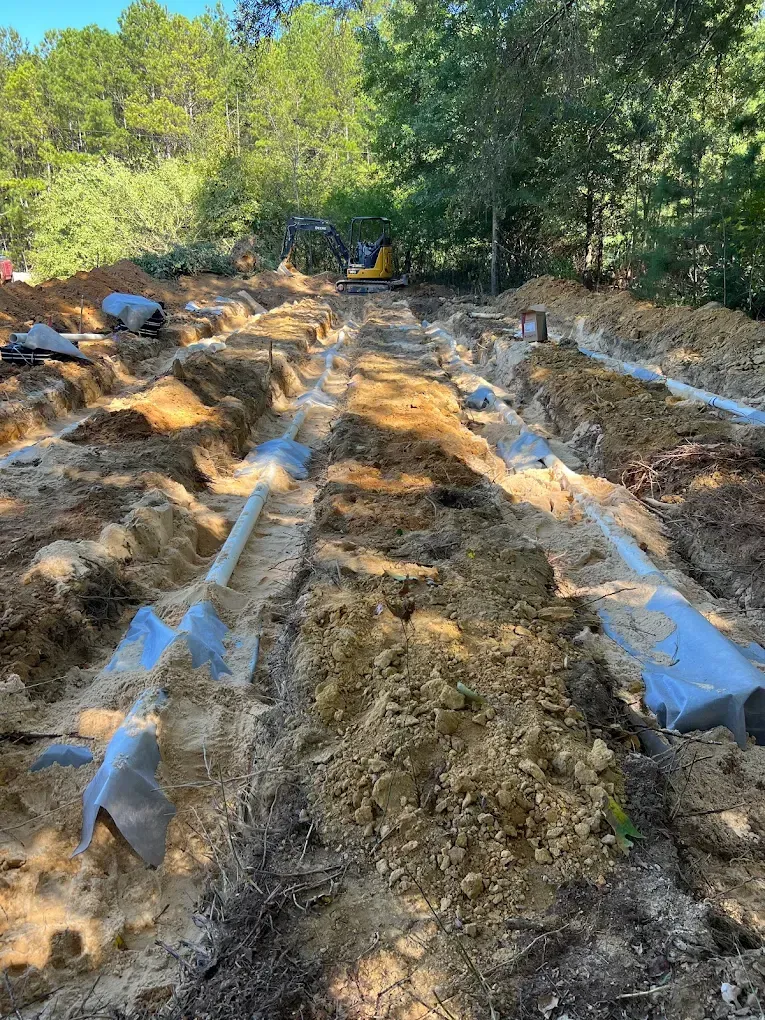
The team structures pumping schedules around Hampton's seasonal pattern rather than calendar defaults, recommending service before the wet season when clay absorption will be most challenged. For installations, modified drain field layouts with wider lateral spacing and shallower installation depth allow effluent to contact the more permeable upper soil layers before encountering the dense clay below. Each maintenance visit checks distribution box balance, baffle integrity, and surface indicators that precede visible failure — giving Hampton homeowners actionable information rather than a clean bill of health that misses developing problems.
Contact us today for septic services in Hampton designed specifically for the soil conditions your system operates in every day.
What Hampton's Clay Soil Conditions Require From Every Septic Service
Generic septic service delivers generic results in Hampton — meaning it performs adequately until clay soil conditions push the system beyond the tolerance that non-clay-adapted service leaves in reserve. Here's what clay-informed service includes that generic approaches skip:
- Pumping intervals calibrated to Hampton's wet-season hydraulic stress rather than a flat three-to-five-year schedule that ignores seasonal clay behavior
- Installation drain field sizing based on measured perc rates in Henry County's actual soil, not regional averages that underestimate clay density
- Distribution box inspection during maintenance visits to catch uneven flow before one lateral reaches saturation while others remain underutilized
- Baffle material assessment on older Hampton systems where concrete baffles have degraded to the point of allowing solids migration into the field
- Surface inspection of the drain field area for soft soil or ponding patterns that indicate hydraulic overload before indoor symptoms develop
Hampton's clay soil is the dominant factor in every septic decision on a Henry County property — from initial installation sizing to the timing of the next pump-out. Get in touch today for septic services in Hampton and schedule service that works with your soil rather than around it.