Griffin's Seasonal Rainfall Cycles Are the Biggest Threat Your Septic System Faces
How Georgia's Wet-Dry Seasons Stress Griffin Systems Without Routine Maintenance
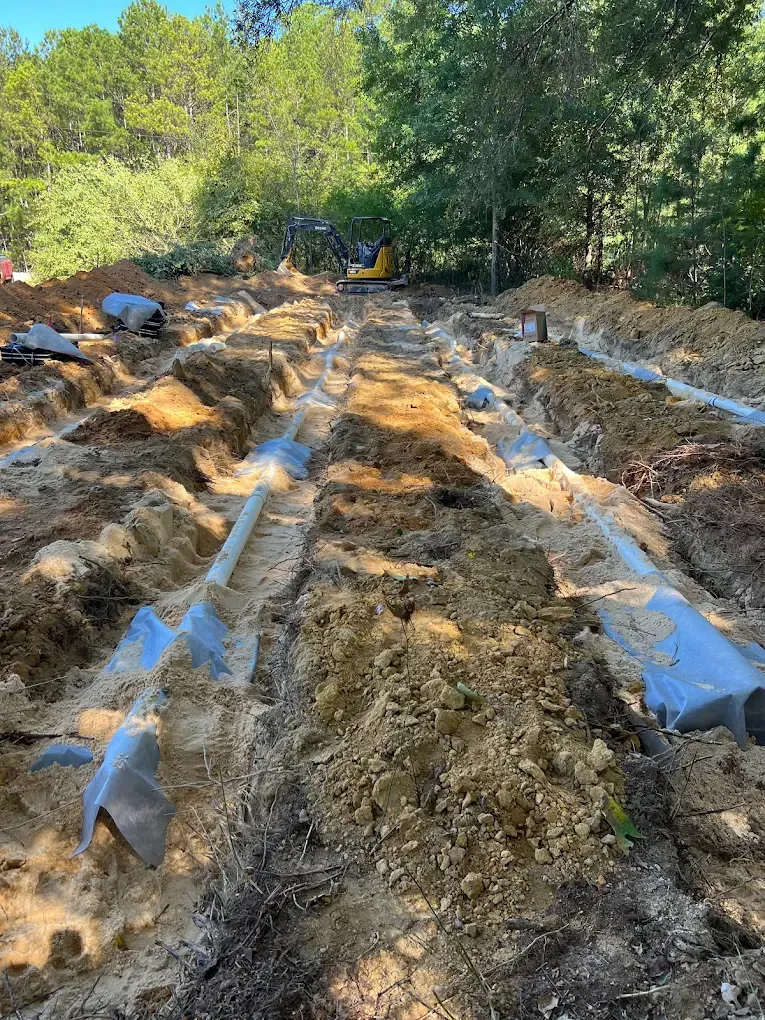
Griffin receives significant seasonal rainfall that saturates already clay-heavy soil, pushing water tables upward and reducing drain field absorption capacity precisely when household wastewater generation is unchanged. A septic system operating without recent maintenance enters each wet season with elevated sludge levels, degraded baffles, or partially clogged distribution lines — conditions that would be manageable in dry soil but become active failures when the ground can't keep up. The system doesn't fail because of one bad event; it fails because deferred maintenance removed its tolerance for the conditions Griffin reliably delivers.
JD Septic & Sewer performs septic tank maintenance visits throughout Griffin and Spalding County, examining tank levels, baffle integrity, inlet and outlet lines, lid condition, and drain field surface indicators during each call. What changes after a maintenance visit is specific and observable: sludge levels drop to a safe operating range, deteriorated components are identified before they cause downstream damage, and the system enters the next weather cycle with its full design capacity restored rather than compromised.
What Maintenance Catches Before Griffin's Next Heavy Rain Season
Griffin's mix of rural properties and expanding suburban neighborhoods means many septic systems are operating on original components that have never been replaced. Baffles made of concrete deteriorate within 15 to 20 years, and a missing outlet baffle allows solids to migrate directly into the drain field with every flush. Root intrusion from the mature trees common on Spalding County properties enters pipe joints gradually, restricting flow until a full backup occurs. Neither of these conditions announces itself — both are found during maintenance visits before they become emergencies.
Each maintenance visit includes a documented assessment of system components, with specific notes on what requires attention now versus what should be monitored at the next service interval. That documentation matters for property sales, insurance claims, and county health department records. Consistent maintenance also extends system lifespan measurably — systems that receive regular service reach 30 to 40 years before requiring full replacement, while neglected systems in similar soil often need replacement within 15 to 20 years.
Schedule maintenance before the fall wet season begins rather than responding to failure mid-winter — reach out now for septic tank maintenance in Griffin.
What Goes Wrong When Griffin Systems Skip Routine Maintenance
Each of the following failure patterns develops silently between service visits and accelerates once Griffin's seasonal ground saturation begins:
- Sludge accumulation above the outlet baffle level, forcing solids into the drain field and permanently reducing absorption capacity in Griffin's clay soil
- Deteriorated concrete or plastic baffles that go undetected until sewage backs up into the home's lowest drains
- Root intrusion into inlet pipes from nearby trees, restricting flow gradually until complete blockage occurs
- Cracked or sunken tank lids that allow surface water infiltration, doubling the hydraulic load on the drain field during rain events
- Distribution box imbalance that concentrates all effluent onto one drain field lateral while others remain unused, causing premature saturation of a single zone
Every one of these conditions is correctable at low cost when caught during a maintenance visit — and expensive to address after the system has already failed into the drain field. The team provides clear next-step recommendations based on what's actually found, not what's statistically probable. Contact us today for septic tank maintenance in Griffin and protect your system before the conditions that stress it most arrive.