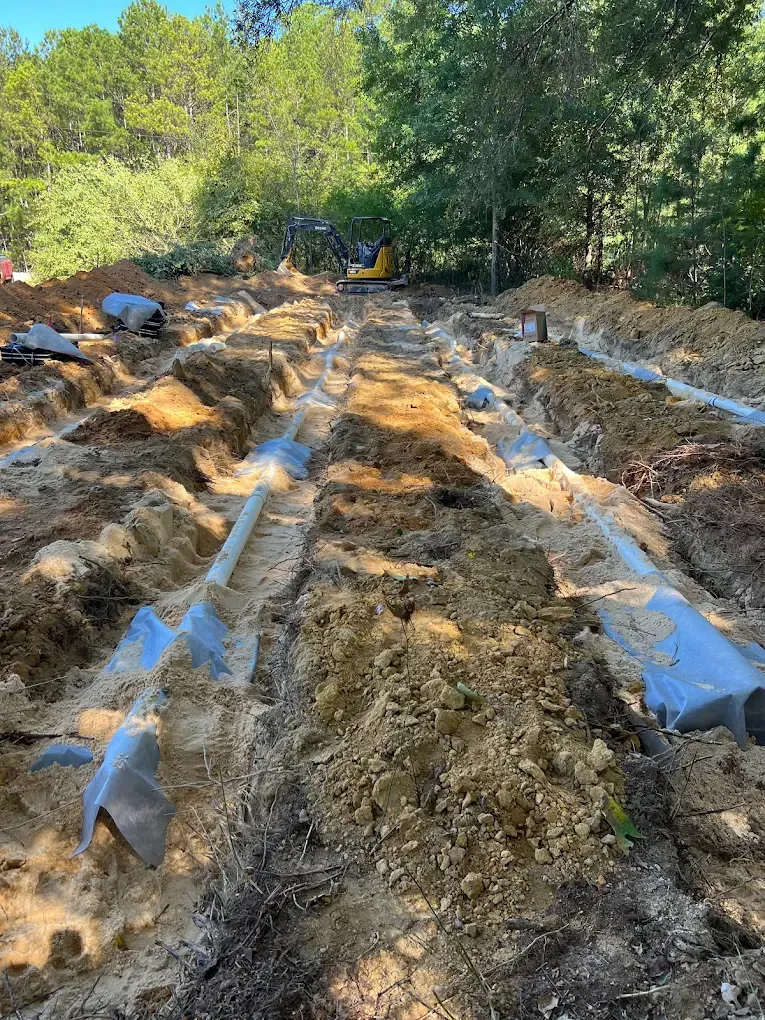
Most Locust Grove Septic Tanks Are Pumped Too Late — Here's What That Costs You
The Standard Pumping Schedule Doesn't Account for Clay Soil — and That's the Problem
Generic advice says to pump every three to five years. That range was built around average soil conditions and average household usage — neither of which describes most properties in Locust Grove. Clay-heavy soil slows effluent absorption, which means your drain field is working harder between pumpings than it would in a sandier environment. When solids overflow into that already-stressed drain field, the damage isn't just inconvenient. It's often permanent without significant repair.
JD Septic & Sewer provides septic tank pumping throughout Locust Grove and the surrounding area, using professional-grade vacuum equipment sized for residential systems of all capacities. Every pumping visit includes a check of sludge depth, baffle condition, and tank integrity — because pumping without inspection only solves half the problem. After service, the tank operates at full capacity, drains respond normally, and the yard above the drain field stays dry rather than showing the soft, saturated patches that indicate a system under stress.
Why Clay Soil in Locust Grove Changes the Right Pumping Frequency
Clay soil absorbs effluent slowly under the best conditions. During Georgia's wet seasons, when the ground around Locust Grove becomes saturated from rainfall, absorption slows further — sometimes stopping almost entirely for days at a time. A tank that's near capacity during a wet period forces partially treated effluent into a drain field that cannot accept it, and the solids that accompany that overflow permanently reduce the soil's absorption capacity in a way that pumping alone cannot reverse.
Pumping schedules should be set based on tank size, household occupancy, and observed sludge accumulation rates — not calendar defaults. The team measures sludge and scum layers during each visit and recommends the next service interval based on what's actually present in your tank rather than a one-size number. Georgia law requires septic waste to be transported and disposed of only at licensed treatment facilities, and every load removed from Locust Grove properties is handled in full compliance with those regulations.
Schedule pumping before your tank reaches the two-thirds full threshold — not after backups appear — by contacting us for septic tank pumping in Locust Grove today.
What to Evaluate When Choosing a Pumping Provider in Locust Grove
Not all pumping services deliver the same value. Here's what to look for when deciding who handles your system — and what separates a complete service visit from one that just removes liquid:
- Whether the provider measures sludge depth before and after pumping, not just fills the truck and leaves
- Whether baffle condition is checked during service — a missing or deteriorated outlet baffle is the leading cause of drain field contamination in Locust Grove's clay soil
- Whether disposal documentation is provided, confirming waste was taken to a licensed Georgia treatment facility
- Whether the pumping interval recommendation is based on observed tank data or a generic three-to-five-year default
- Whether the technician identifies developing issues — cracked lids, root intrusion, effluent odors — that signal a repair need before the next pump cycle
A pumping visit that includes inspection and honest condition reporting gives you actionable information about your system's trajectory. One that skips those steps leaves you operating blind until the next failure. Contact us today for septic tank pumping in Locust Grove and get service that tells you what your system actually needs.