Preparing for Septic System Design and Soil Testing in Jackson, GA
Professional soil testing in Jackson, GA evaluates percolation rates, groundwater depth, and site characteristics to design septic systems that meet health department standards and perform reliably for decades.
What Information Do Perc Tests Provide?
Percolation tests measure how quickly water moves through soil at your proposed drain field location, determining the minimum drain field size and design type required for code compliance.
Technicians dig test holes at multiple locations and depths, fill them with water, and record how long the soil takes to absorb a specific volume. Faster percolation allows smaller, conventional drain fields, while slow-draining soils require larger areas or alternative treatment systems.
Results vary significantly across your property due to soil composition changes, clay lenses, or rock layers. Testing multiple sites identifies the best location for your drain field and reveals any areas that cannot support standard septic systems, preventing costly installation mistakes.
How Does Groundwater Depth Affect System Design?
Shallow groundwater tables require raised drain field designs or mound systems to maintain the required separation distance between effluent and the water table, protecting drinking water quality.
Georgia health codes mandate minimum vertical distances between your drain field bottom and seasonal high water levels. If groundwater rises too close to the surface during wet periods, standard trenches cannot provide adequate treatment before effluent reaches the aquifer.
Soil testing includes groundwater observation over time to identify seasonal fluctuations. Properties with high water tables need specialized designs that cost more upfront but ensure your system meets environmental protection standards and functions properly year-round.
Which Property Features Influence Septic Placement?
Well locations, property lines, streams, slopes, trees, driveways, and existing structures all affect where you can legally place septic components according to Butts County setback requirements.
Wells require specific horizontal distances from septic systems to prevent contamination. Property boundaries, especially in subdivisions, limit how close you can install drain fields to neighboring land.
Steep slopes may prohibit standard drain field construction, while large trees create root intrusion risks. Expert septic system design services in Jackson map all these constraints to find compliant locations that also provide practical access for maintenance and future repairs.
Can Jackson's Red Clay Soils Complicate Installation?
Butts County's characteristic red clay drains slowly and compacts easily during construction, requiring careful handling and sometimes specialized drain field designs to ensure adequate wastewater treatment.
Heavy clay soils have tiny particles that pack tightly, limiting water movement. When wet, clay becomes sticky and difficult to work with, while dry clay hardens like concrete, complicating excavation.
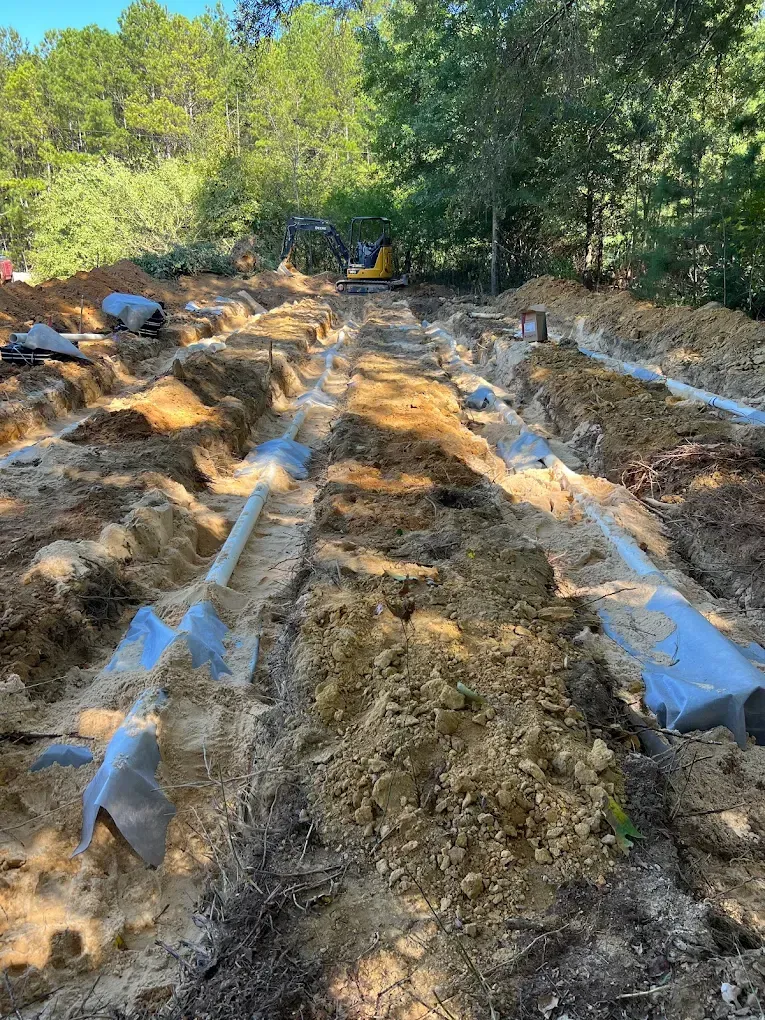
Professional soil testing identifies clay depth and density, allowing designers to specify appropriate drain field configurations. Some sites need sand or gravel imported to improve drainage, while others work well with pressure-distribution systems that spread effluent evenly across the entire drain field despite slow native soil percolation.
Thorough site evaluation prevents surprises during installation and ensures your system meets all regulatory requirements. Proper design based on accurate soil data creates systems that handle your household's wastewater reliably regardless of soil challenges.
JD Septic & Sewer conducts comprehensive soil testing and custom septic system design throughout Jackson and Butts County. Experience professional site evaluation by calling 770-652-5503 to begin planning your new septic system with confidence.