Can Heavy Georgia Rainfall Affect Your Newnan, GA Septic Installation?
Homeowners in Newnan, GA planning a new septic system need to understand how Georgia's rainfall patterns influence installation design and long-term performance.
How Does Georgia's Rainfall Shape Septic System Design?
Georgia averages more than 50 inches of rainfall per year in many areas, including much of Coweta County. That's not just a number on a weather chart — it has real consequences for how septic systems behave, how drain fields need to be designed, and what happens when rainfall exceeds a system's ability to keep up.
Septic drain fields work by dispersing partially treated wastewater into the soil, where it filters through before reaching groundwater. When the ground is already saturated from heavy or prolonged rainfall, that absorption process slows dramatically. Water has nowhere to go, so it backs up. Systems that are properly sized for normal conditions can still struggle during extended wet periods if they weren't designed with regional rainfall patterns in mind.
A knowledgeable local contractor accounts for Georgia's rainfall intensity when sizing your drain field. This means calculating not just for daily household water usage but also for those periods when heavy spring or summer storms dump inches of rain in a short time. Designing with a safety margin protects your system from stress peaks that would otherwise cause backups or yard flooding.
What Site Factors Matter Most for New Installations in Newnan?
Newnan sits in Coweta County, where the landscape includes rolling terrain, creek corridors, and a mix of clay and sandy loam soils depending on the specific location. These variations matter significantly when planning where and how to install a new septic system.
Topography determines drainage patterns. Properties on higher ground with good natural slope tend to drain better, making gravity-fed drain field systems more effective. Properties in low-lying areas or near creek flood plains face additional water management challenges — not just from rainfall but from rising groundwater during wet seasons. In these areas, conventional drain field placement may be restricted, and elevated or alternative system designs become necessary.
Soil type is another key variable. Clay-heavy soils in parts of Coweta County slow absorption, requiring larger drain fields and careful design. Sandy loam soils absorb more readily but may require different tank sizing and maintenance schedules. Your perc test identifies which type of soil you're working with, and a local contractor's experience with Newnan-area soils helps translate that data into a design that works reliably long-term.
Property setbacks from wells, streams, and neighboring structures are also stricter in certain areas. Newnan's proximity to several creeks and water features means some properties face tighter setback requirements that limit where the drain field can be located. Identifying these constraints early prevents design revisions and permit delays later in the project. Explore the range of areas JD Septic & Sewer serves across the region on our service area page.
What Are the Steps to a Properly Permitted Septic Installation?
Installing a new septic system in Newnan follows a defined process regulated by Coweta County's Environmental Health department. Understanding each step helps you plan your project timeline and avoid the common pitfalls that delay completion.
It starts with a site visit and soil evaluation. Your licensed contractor assesses your property's topography, measures the distance to wells and property lines, and conducts a soil percolation test to determine absorption rates. This data becomes the foundation for your system design. In Coweta County, the soil evaluation must be conducted by or in coordination with a licensed professional and submitted with the permit application.
The permit application includes your system design, soil test results, a site plan, and the property's water usage profile based on bedroom count. Coweta County's environmental health office reviews the application and either approves it, requests revisions, or requests a field visit before issuing the permit. Approval timelines vary depending on application volume and whether any issues need to be resolved.
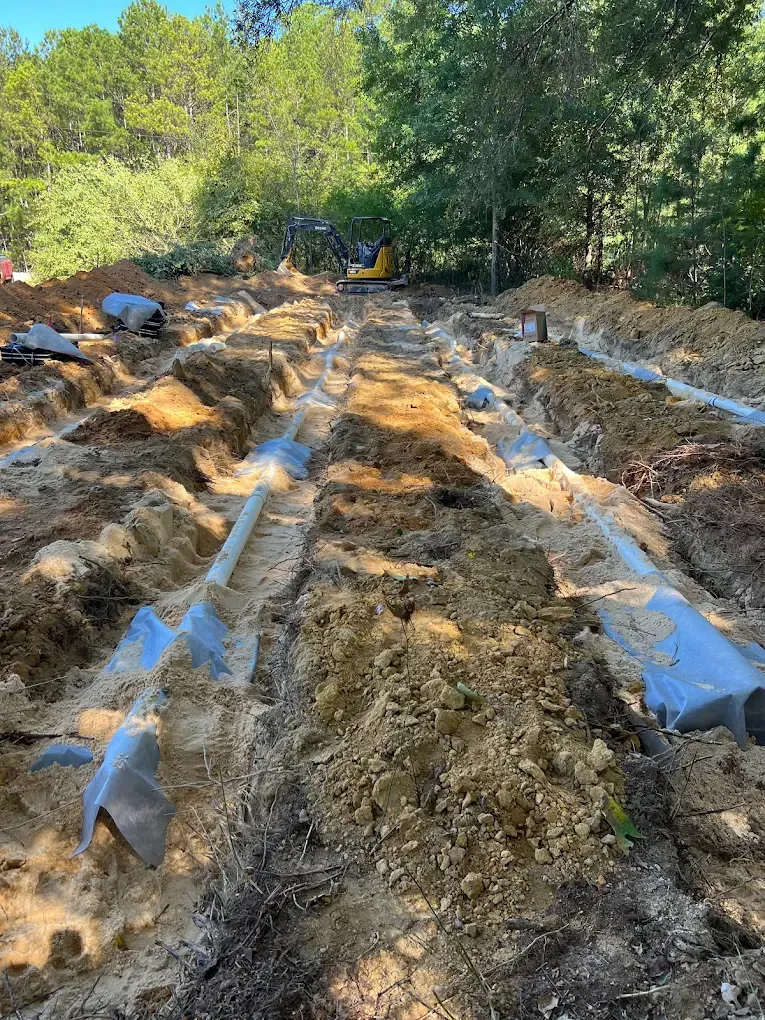
Once the permit is issued, installation can begin. The contractor excavates the tank location and drain field, places the components according to the approved design, connects the inlet and outlet pipes, and grades the area to manage surface water runoff. After installation, the county inspector visits to verify that the work matches the approved plan before the system can be covered and used.
How Does Georgia's Weather Affect the Best Time to Install?
Timing your installation around Georgia's weather patterns can make the process easier and help ensure the finished system performs well from day one. This is especially relevant in Newnan, where seasonal rainfall is significant.
Late summer and fall are generally the most favorable installation windows across Coweta County. Soil tends to be drier during this period, making excavation cleaner and grading more accurate. Drier conditions also mean the drain field is less likely to be disturbed by surface water intrusion during installation, which can affect how the soil settles around the perforated pipes and distribution components.
Spring installations are possible but come with more variables. Heavy spring rains can delay excavation, complicate soil testing accuracy, and slow the county permit and inspection process when everyone else is also rushing to get projects done before the heat of summer. If your construction timeline requires spring installation, planning and permitting several months ahead gives you the best chance of staying on schedule despite weather variability.
Read how JD Septic & Sewer has helped Coweta County homeowners navigate seasonal timing and system design on our customer testimonials page, then call (470) 541-0848 to discuss your Newnan installation project with someone who knows the local conditions well.
A new septic installation in Newnan that's designed with Georgia's rainfall in mind gives your home reliable wastewater management that holds up through wet seasons and dry ones alike.
Explore your options and get expert guidance by calling JD Septic & Sewer at (470) 541-0848 for septic installation services in Newnan built for Georgia's climate.